
Damp crawl space: warning signs and what to check first
By Elena Okafor · Updated 2026-09-17
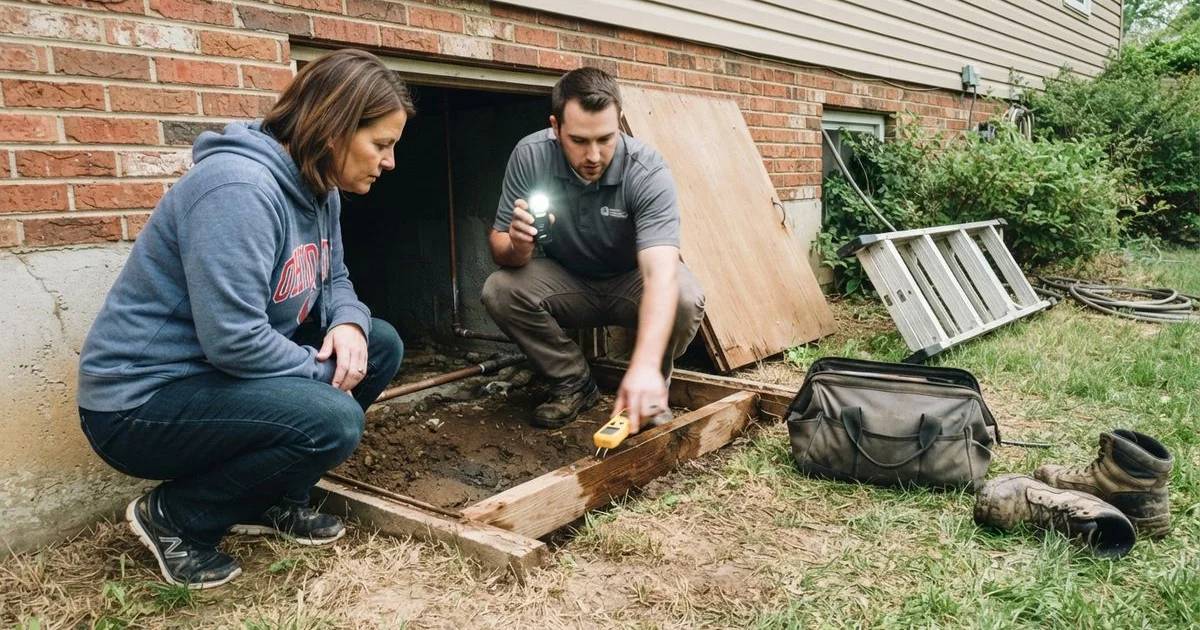
The space under your house is easy to ignore until the floors feel cold or the whole place smells like a damp cellar. Moisture there tends to creep upward. This guide helps you spot early signs and decide what to do about them.
The reviews and review insights on this site reflect individual people’s experiences. Nothing here constitutes medical advice, so please consult a qualified health practitioner about your own situation. Mold and air quality questions about people in your home belong with a health professional.
Signs from inside the house
- A musty or earthy smell, strongest near floors or in the lowest rooms.
- Floors that feel cold, spongy or uneven.
- Doors and cabinets that stick in humid weather.
- Condensation on windows or ducts that is hard to explain.
- Increased pest activity such as insects or rodents.
None of these confirms a crawl space problem on its own. Together they justify a look.
Signs from the crawl space itself
| Observation | What it may point to |
|---|---|
| Standing or pooled water | Drainage or groundwater entry |
| Wet or darkened soil | Seepage or poor grading outside |
| Wood framing with dark staining or fuzzy growth | Long-term high humidity |
| Insulation drooping or wet | Moisture or leaks from above |
| Rusting nails or ductwork | Persistent humidity |
| Efflorescence (white powder) on masonry | Water moving through the wall |
| Torn or missing ground plastic | No vapor control |
Safety first
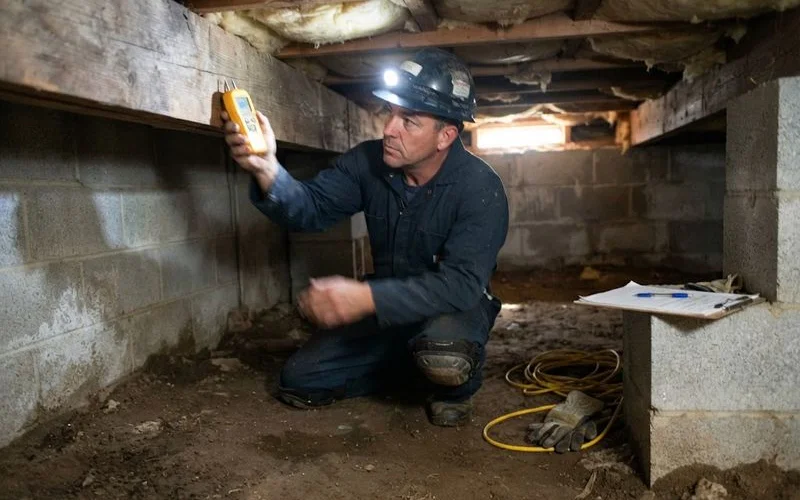
Crawl spaces are cramped, with sharp edges, uneven ground and sometimes wiring at head height. Do not go in if water is present near electrical lines. Watch for animals and treat visible growth as something to keep out of your lungs. If you are unsure, an inspection from a professional is a reasonable expense.
Likely causes in Trumbull County
Clay soil that holds water, downspouts that discharge near the foundation, ground sloping toward the house, and humid summers all contribute. Many homes in older Warren and Niles neighborhoods have vented crawl spaces designed for a different approach to moisture, so what was standard decades ago may not suit the house now.
What to do first
- Fix gutters, downspouts and grading outside.
- Remove standing water safely, or have it removed.
- Fix any plumbing leaks.
- Hold off on covering wet areas with liner until the source is understood.
- Get one or two written assessments if the problem persists.
A glossary entry on this site covers vapor barriers and dehumidifiers if you want the definitions. This guide is about recognizing when it matters.
What reviewers mention
Reviewers of local waterproofing providers praise tidy work and clear explanations, and some mention water problems returning later or slow call-backs. These are individual experiences, which makes follow-up arrangements worth asking about up front.
Why it matters for the house
A crawl space is connected to the rest of the home. Air tends to move upward through gaps around pipes, ducts and floor penetrations, so humid or musty air below can reach rooms above. Wood that stays damp for long periods can soften, and damp insulation stops doing its job. Over time that can mean repair work that costs far more than the original moisture fix would have. None of this is certain for any given house, which is why an on-site look beats guesswork.
Keep notes and photos each time you check. Dates, humidity readings and pictures of any staining give a contractor something concrete to work from, and they let you see whether a change you made had any effect.
Next steps
If you want to see who works on crawl spaces locally, the crawl space waterproofing category is the place to start, and our rubric explains how listings are scored. You can also head to the home page. Once you know the space is damp, the guide on whether crawl space encapsulation is worth it covers the next decision.
Questions people ask
- Is a damp crawl space dangerous?
- Persistent moisture can damage wood framing and encourage mold and pests. Air from under the house can also reach living areas. For health questions about your own situation, speak with a health professional.
- Should I go into the crawl space to look?
- Only if it is safe: wear gloves, a respirator rated for dust and mold, and eye protection, and never enter with standing water near wiring. Otherwise have a professional inspect.
- Do open vents dry out a crawl space?
- Not reliably. In humid Ohio summers, outdoor air entering through vents can add moisture instead of removing it.
- How often should I check my crawl space?
- A quick look each spring and after heavy storms is a reasonable habit.