
Foundation cracks: which ones are worth worrying about
By Elena Okafor · Updated 2026-09-14
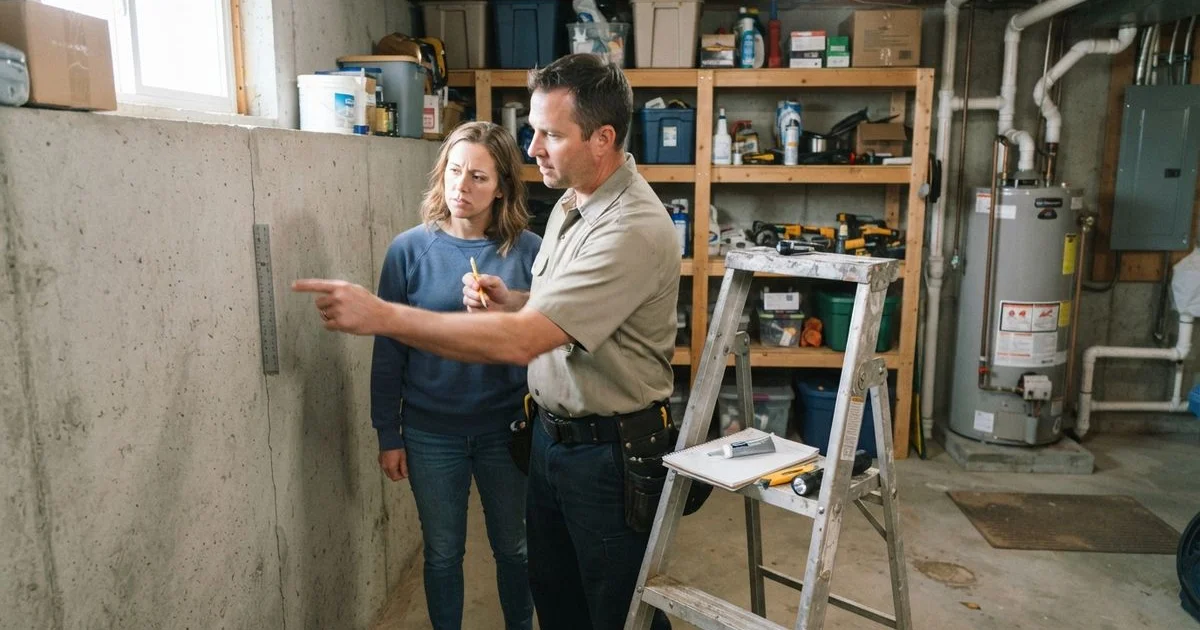
Seeing a crack in a basement wall is unnerving. Most are not an emergency, but a few are worth a prompt call. This guide helps you sort what you see, and decide how fast to act. It does not diagnose your home, which takes someone on site.
The reviews and review insights on this site reflect individual people’s experiences. Nothing here constitutes medical advice, so please consult a qualified health practitioner about your own situation. This is general information, not engineering advice.
Three questions to ask first
- Which way does it run: vertical, diagonal, stair-step or horizontal?
- How wide is it, and is it uniform or wider at one end?
- Is it dry, damp, or leaking, and is it changing over time?
Crack types at a glance
| What you see | Common explanation | Typical urgency |
|---|---|---|
| Thin vertical line, hairline width | Shrinkage as concrete cured | Low; monitor |
| Vertical crack, wider at top or bottom | Settlement or movement | Moderate; have it assessed |
| Diagonal crack near a corner or window | Differential settlement | Moderate |
| Stair-step through block mortar joints | Movement in masonry | Higher; get it checked |
| Horizontal crack, often mid-wall | Soil and water pressure pushing in | Higher; have a professional look |
| Wall visibly curving inward | Bowing from sustained pressure | High |
Glossary pages on this site define hairline, stair-step and horizontal cracks, and bowing walls. Treat the table as a starting point, not a verdict.
Why Trumbull County walls crack
Freeze-thaw cycles, heavy clay soil that swells when wet and shrinks when dry, and older block foundations all play a part. Soil saturated after wet seasons pushes inward on walls, and poor drainage makes that worse. That is general regional context and says nothing about your particular wall.
Monitoring a crack
- Photograph it with a coin or ruler for scale.
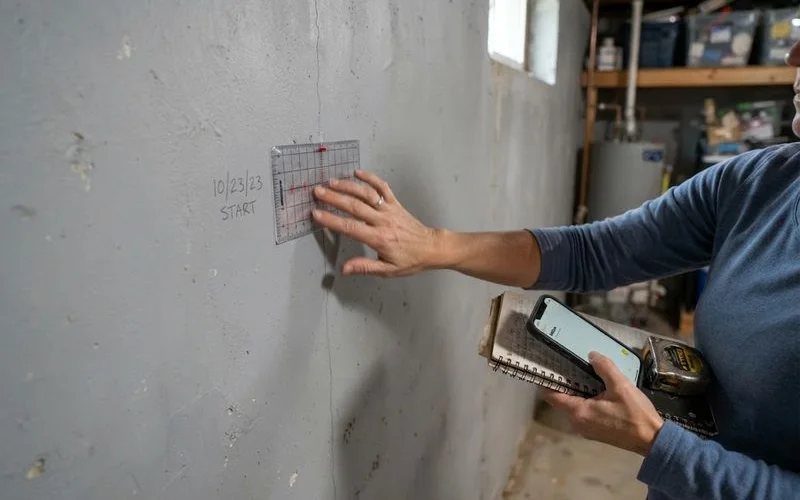
- Draw a pencil line across each end and date it.
- Measure width at the same spot monthly and after thaw or heavy rain.
- Note any new cracks nearby, sticking doors or windows, or sloping floors upstairs.
If measurements change, that is the signal to call.
Repair approaches, in plain terms
Some cracks are sealed by injecting epoxy or polyurethane from inside. Others call for structural reinforcement such as wall straps or bracing, and some need excavation. A company should tell you why it is recommending one approach over another, and what it does not address. Repairing a crack does not remove the cause, so ask what will be done about water or soil pressure too.
Reading what reviewers say
Review themes for local foundation and basement work include praise for clear explanations and tidy worksites, and complaints about slow call-backs and, in one case, water problems after a job. Those are individual accounts. They are a reason to ask how follow-up works before you hire.
Getting a second opinion
Larger concerns deserve a second look. A structural engineer does not sell repairs, so their report can serve as a neutral reference when you compare company proposals. If you go straight to repair companies, get at least two written assessments and compare how they explain the cause. When one says a crack is cosmetic and another recommends reinforcement, ask each to show you what they measured and why. A company that explains its reasoning on site and in writing is giving you something you can check.
Keep every report, photo and measurement. If you sell later, that record shows what you knew and when you acted on it.
When to get help quickly
- A horizontal crack with inward bulge.
- Cracks widening over weeks.
- Water streaming in.
- Doors and windows suddenly binding along with new cracks.
Browse local options in the foundation crack repair category. See our rubric for how listings are scored, or go back to the home page. Cracks often come with damp air below the floor too, and the guide on crawl space moisture signs covers that side.
Questions people ask
- Are all foundation cracks serious?
- No. Many narrow vertical cracks come from concrete shrinking as it cures. Width, direction, and whether the crack is changing are what matter.
- How do I tell if a crack is growing?
- Mark the ends with a pencil and date them, then measure the width with a crack gauge or ruler every few weeks and after big temperature swings.
- Who should look at a crack I am unsure about?
- A structural engineer gives an independent opinion. Foundation repair companies also inspect, though they sell repairs, so an independent view can be useful for larger concerns.
- Can a crack be repaired without digging?
- Some cracks can be sealed from the inside by injection. Whether that suits your wall depends on the crack and the cause, which a professional has to assess.