
Wet basement: what you can DIY and when to hire a pro
By Elena Okafor · Updated 2026-09-11
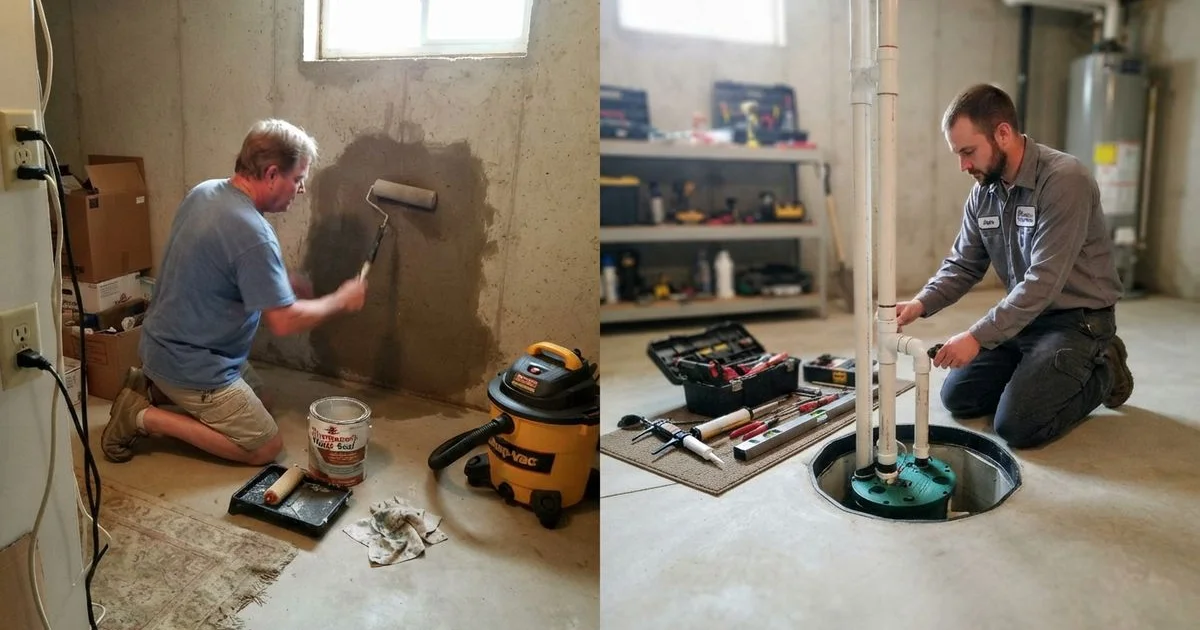
Not every damp basement needs a contractor. Plenty of moisture problems start outside the house and can be reduced with inexpensive work. Others involve walls, floors and groundwater, and guessing wrong can cost you a season. Here is how to sort the two.
The reviews and review insights on this site reflect individual people’s experiences. Nothing here constitutes medical advice, so please consult a qualified health practitioner about your own situation. This is general information, not professional advice. Never touch electrical equipment in standing water.
Start outside, it is cheap
Water that reaches your foundation walls has to go somewhere. Check these first:
- Gutters clear and sound, with no overflow at corners.
- Downspouts discharging several feet away from the house, using extensions.
- Soil sloping away from the foundation, with no flower beds holding water against the wall.
- Window wells clear of debris, with covers in good condition.
If a damp spot lines up with a downspout or low ground, fixing that may be all you need. You can then watch the next few rainstorms.
Test before you treat
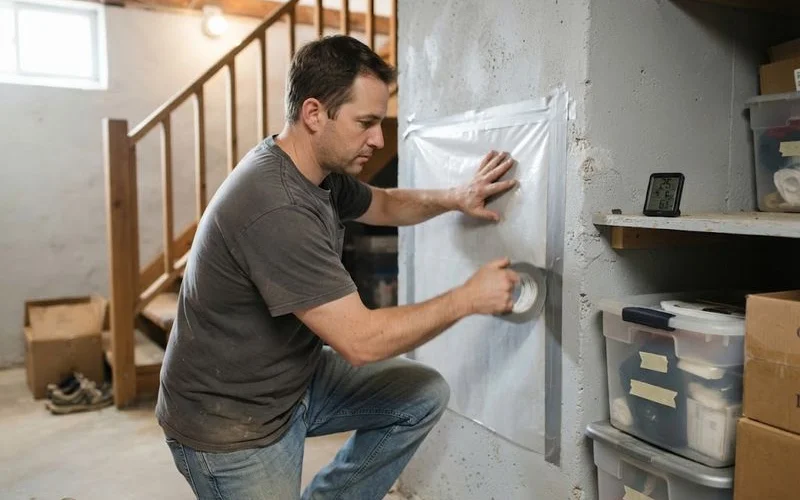
Condensation and seepage look alike. The foil test in the FAQ separates them. Also note timing: damp only in humid summer weeks leans toward condensation and a dehumidifier; damp after storms or snowmelt leans toward groundwater.
Where DIY stops
| Situation | DIY-reasonable? | Why |
|---|---|---|
| Clogged gutters, short downspouts | Yes | Low risk, low cost |
| Regrading a few feet of soil | Often | Needs care not to bury siding or block vents |
| Small hairline cracks, dry | Sometimes | Cosmetic sealing is possible, but a changing crack should be assessed |
| Wall paint or sealer on damp block | Limited | Surface coatings do not control water pressure |
| Active seepage at floor-wall joint | No | Usually needs drainage work |
| Horizontal cracks or bowing walls | No | Structural question for a qualified professional |
| Sump pump replacement | Depends | Involves plumbing and electrical connections |
Signs to call someone
- Water entering during every heavy rain.
- A wall that is bowing, or a crack that is growing or running horizontally.
- Stair-step cracks in block walls.
- A sump that runs constantly or fails during storms.
- Musty smell or visible growth that returns after you clean it. If anyone in the home has breathing concerns, speak with a health professional about your own situation.
A glossary term on this site covers several of these crack types if you want the definitions; this guide is about the decision.
Keep a simple log
Whatever you try, write it down. Note the date, the weather in the previous two days, which wall was wet and how much. A few weeks of notes will show whether a change helped. They also let an estimator see the pattern instead of relying on memory, and that usually leads to a more accurate scope. A phone photo of the same spot after each rain does the job.
What a professional adds
A trained estimator can trace where water enters, tell whether a crack is shrinkage or movement, and size drainage to the problem. Reviewers in this directory often mention clear explanations from the estimator as something they valued. Others mention slow call-backs, so book early and follow up in writing.
Cost of waiting
Seasonal timing matters in Ohio: freeze-thaw cycles can widen cracks and spring melt tests every weak point. Small problems usually give more options than large ones. That is a general pattern, not a promise about your house.
Where to go next
If outside fixes do not settle it, look at local companies in the basement waterproofing category. To see how listings are ranked, read our rubric, or start from the home page. If you do call someone, the guide to what drives basement waterproofing costs helps you read the quotes.
Questions people ask
- Will waterproof paint stop a wet basement?
- Paint can cover a damp patch on a wall, but it is not designed to hold back water pressing in from outside. If water keeps coming, the source needs attention.
- What is the first thing to check when my basement is damp?
- Look outside: gutters, downspouts and ground slope near the wall that is wet. These are the cheapest things to correct.
- How can I tell condensation from a leak?
- Tape a square of foil to the wall for a day or two. Moisture on the room side points to condensation, moisture underneath points to water coming through.
- When is it urgent?
- Standing water near electrical equipment, a fast-growing crack, or water entering during every rain are signs to bring in help promptly.