
French drains and other yard drainage fixes: what to know before you dig
By Elena Okafor · Updated 2026-09-20
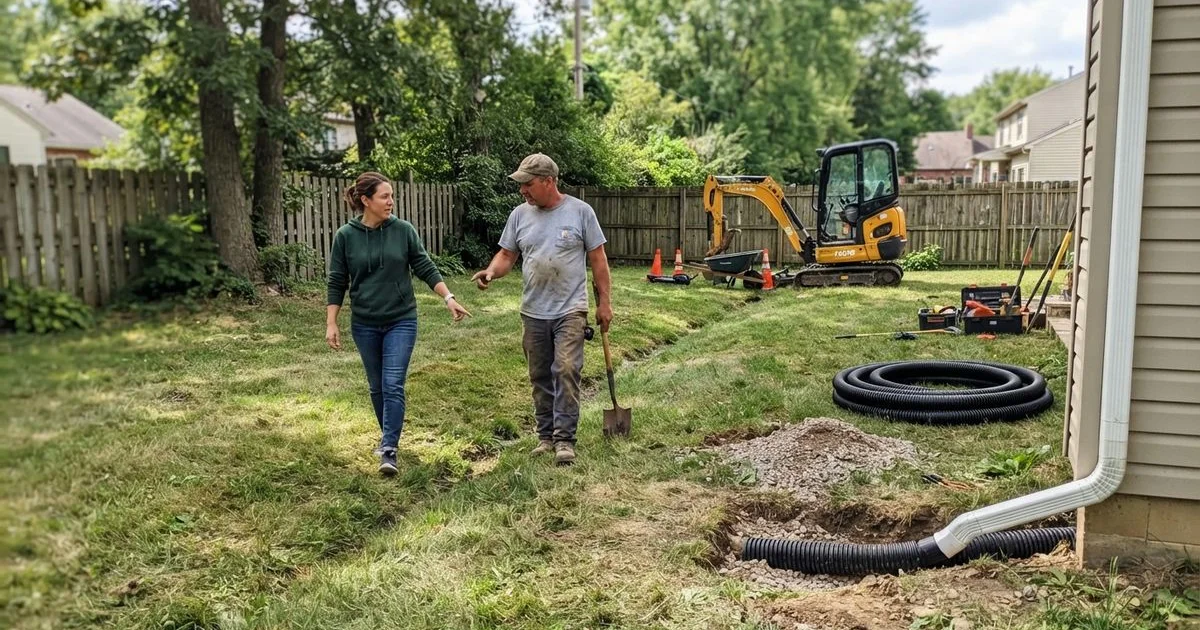
When water pools against the house or the yard stays soggy for days, the first idea many people have is a French drain. Searches for French drain installation are high, which tells you plenty of homeowners are asking. The right fix, though, often costs less and starts above ground.
The reviews and review insights on this site reflect individual people’s experiences. Nothing here constitutes medical advice, so please consult a qualified health practitioner about your own situation. This is general information, not engineering or legal advice.
Work from simplest to most involved
| Option | What it does | Fits when |
|---|---|---|
| Gutter cleaning and repair | Stops overflow at the wall | Water falls at the foundation edge |
| Downspout extensions | Moves roof water away | Downspouts empty beside the house |
| Regrading | Slopes soil away from the foundation | Ground slopes toward the wall |
| Window well drains and covers | Keeps well water from the window | Water enters at basement windows |
| French drain | Collects and diverts shallow groundwater | Water pools in a specific area |
| Perimeter or footing drain | Handles water at the foundation base | Persistent pressure on walls |
| Sump with discharge line | Pumps collected water away | Drains need somewhere to go uphill |
How a French drain works
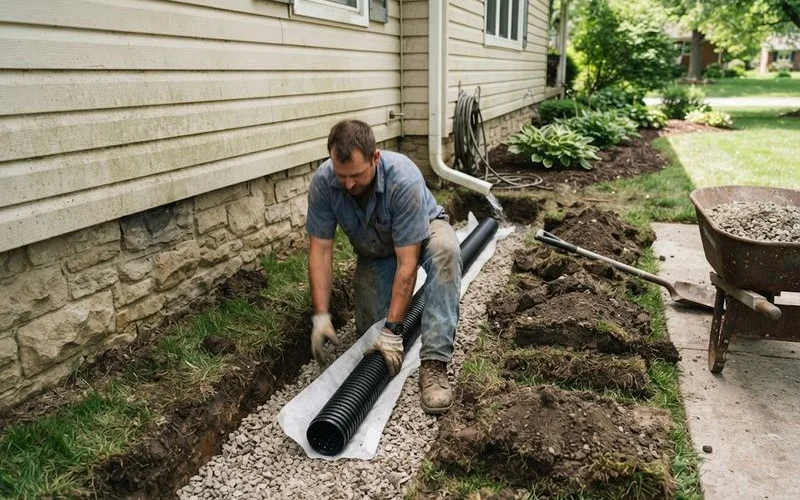
A perforated pipe sits in a gravel-filled trench, sloped so collected water flows to an outlet. It works as long as the pipe slopes continuously, is wrapped to keep out silt, and ends where water can leave. Without that outlet, it just becomes an underground puddle. Our glossary covers French drains, perimeter drains and footing drains in short definitions; here the question is whether you need one.
Questions to settle before digging
- Where does the roof water go today?
- Does the ground slope toward or away from the house?
- Is the problem surface runoff or groundwater rising?
- Where can collected water exit by gravity? If it cannot, is a pump needed?
- Are there utility lines, septic components or trees nearby?
Call 811 before you dig, which is a free utility locating service in Ohio. Professionals will normally do this too, but confirm.
Soil matters here
Much of northeast Ohio has clay-rich soil that drains slowly. Water sits, and clay swells when wet, adding pressure on walls. This is why exterior drainage is a common topic locally, and why a company should explain how it handles heavy clay.
Common mistakes
Several things go wrong often enough to list. Drains laid without a continuous slope hold water instead of moving it. Trenches without filter fabric fill with silt and clog. Downspouts piped into the same line can overload a small drain in heavy rain. Discharging onto a neighbor’s lot can start a dispute. And burying a drain next to a tree can invite roots into the pipe. None of these is hard to avoid if you plan the route and the outlet before the first shovel goes in.
Take photos of the yard before work, so restoration can be checked against the original condition.
What to ask a company
- What problem do you think the drain solves, and what will it not solve?
- Where does it discharge, and who is responsible if the outlet clogs?
- What happens to the yard, and who restores it?
- What is covered in the warranty?
What reviewers say
Local reviewers highlight clean worksites with debris removed and yard cleanup, along with clear communication. Some mention slow call-backs. Those are individual experiences and worth weighing as you choose.
Where to look next
Browse the exterior waterproofing and drainage category for local providers, read our rubric for how listings are scored, or return to the home page. If water is already reaching the basement, the guide on what you can DIY and when to hire a pro is the next read.
Questions people ask
- Is a French drain always the answer to a wet yard?
- No. Many wet spots come from downspouts, grading or compacted soil. A French drain suits some situations, but it needs somewhere for the water to go.
- Where should a drain discharge?
- To a location where water can run off or soak in without harming your neighbor's property or the foundation. Local rules and lot layout limit your options.
- Will exterior drainage keep my basement dry?
- It can reduce the water reaching the wall, but results depend on the cause. Nothing here is a guarantee for any home.
- Do I need a permit?
- Sometimes. Rules vary by municipality and by what is being connected or discharged. Call your local building or zoning office before digging.